Article Sep 28, 2026, 06:52 AM
Who Should Manage Software Licenses: IT, Procurement, Finance, or Management?
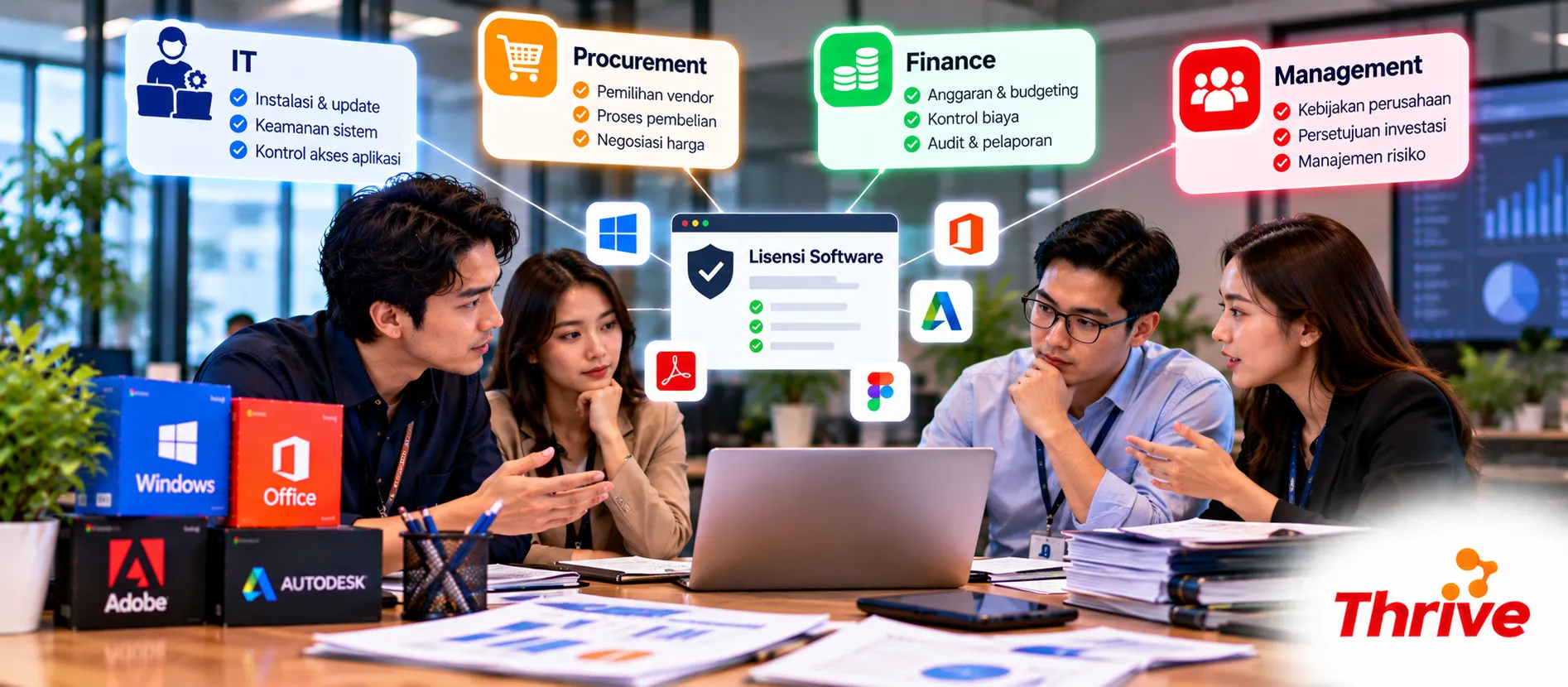
A company has already purchased legitimate software, but when the subscription is about to expire, no one knows who is responsible for renewing it. The IT team assumes Procurement will handle it, while Finance is waiting for a payment request.
This situation often happens when a company has not clearly defined responsibilities for software license management.
Purchasing affordable genuine software alone is not enough. Companies also need a clear process for procurement, recordkeeping, and license renewal.
Who Is Actually Responsible for Software Licenses?
Software license management should involve several departments, each with different responsibilities.
IT: Manages installation, activation, security, and license usage.
Procurement: Handles purchasing, vendors, quotations, and contracts.
Finance: Manages budgets, payments, and cost records.
Management: Approves policies, budgets, and investment priorities.
In practice, IT can serve as the primary owner of the software license inventory, while other departments perform their respective functions.
The procurement of affordable genuine software becomes more controlled when each department clearly understands its responsibilities.
Effective Division of Responsibilities for Software License Management
1. IT: Controlling License Usage and Compliance
The IT team needs to know which software is installed, who is using it, and when each license expires.
For example, a company may purchase 50 licenses for a productivity application, but only 35 are actively being used.
Without a proper inventory, the company could end up paying for 15 licenses that provide no value.
By choosing affordable genuine software, IT can align the license type with technical requirements and the actual number of users.
IT should also ensure that software installation is performed through official and legitimate sources.
2. Procurement: Managing Vendors and the Purchasing Process
Procurement is responsible for ensuring that software purchases follow company policies.
Its responsibilities include requesting quotations, negotiating prices, reviewing contracts, and issuing purchase orders.
When sourcing affordable genuine software, Procurement should compare pricing, license periods, and vendor support terms.
The lowest price does not always provide the most efficient total cost of ownership.
3. Finance: Controlling Budgets and Payments
Finance ensures that software license costs are properly recorded and payments are made according to schedule.
For example, a company may have 10 subscription-based applications with different renewal dates.
Without centralized records, payments may be delayed or the required budget may not be available when needed.
The procurement of affordable genuine software should be accompanied by annual cost planning so expenses are easier to forecast.
4. Management: Setting Policies and Priorities
Management is responsible for setting software usage policies and budget approval limits.
For example, the purchase of a new application may require IT approval before Procurement can process it.
This policy helps prevent the company from purchasing multiple applications with overlapping functions.
Management can also establish standards for the use of affordable genuine software to support compliance and operational efficiency.
How Can Companies Prevent Late License Renewals?
Companies can use a Software Asset Management (SAM) system.
This type of system helps track the number of licenses, users, vendors, and expiration dates.
For example, renewal reminders can be scheduled 60, 30, and 7 days before a license expires.
When using affordable genuine software, companies still need to make sure all purchasing information is properly documented.
This ensures that the renewal process does not depend on a single employee.
Software License Management Checklist for Companies
To prevent overlapping responsibilities, companies can implement the following steps:
Assign IT as the owner of the software license inventory.
Create a database containing software details and renewal dates.
Document quotations, purchase orders, and proof of purchase.
Assign a PIC or person in charge for each application.
Set reminders before licenses expire.
Review license usage every 3–6 months.
When purchasing affordable genuine software, make sure vendor information, license type, and validity period are immediately entered into the database.
Structured management of affordable genuine software also makes audits and budget planning easier.
FAQ
1. Should software licenses be managed by IT?
IT should manage the inventory and technical usage of software licenses. However, purchasing and payment should still involve Procurement and Finance.
2. Who is responsible for renewals?
IT confirms whether the license is still needed, Procurement handles the purchasing process, and Finance processes the payment according to company policy.
3. Do small companies need Software Asset Management?
Yes, although a centralized spreadsheet may be sufficient. When purchasing affordable genuine software, small companies should still record users and license validity periods.
4. What if the number of licenses exceeds the number of active users?
IT can evaluate unused licenses before renewal. Any reduction in license quantity should follow the vendor’s contractual terms.
5. Who decides which software employees are allowed to use?
Management sets the policy, while IT evaluates the application’s security and compatibility.
6. How can companies reduce software licensing costs?
Conduct usage audits, consolidate purchases, and evaluate subscription packages. Choosing affordable genuine software according to actual needs helps prevent unnecessary spending.
Software Licenses Are Not Only IT’s Responsibility
Effective software license management requires coordination between IT, Procurement, Finance, and Management.
With a clear division of responsibilities, companies can reduce the risk of late renewals, budget waste, and unauthorized application usage.
By using affordable genuine software, companies can meet their legitimate licensing requirements while building a more structured software asset management process.
Choosing the right affordable genuine software also helps companies maintain licensing compliance and operational continuity.
Related Articles
Also read other interesting information from us

General
Checklist for Choosing Safe and Reliable Financial Software
Choosing financial software isn't just about features, but also about data security and business sustainability. In the...

General
Best Project Management Apps for Digital Startups in 2025
Amidst the rapid development of the digital world, startups increasingly need effective project management tools to supp...

General
Front-End vs Back-End Developer: What is the Role of Web Developers in Indonesia?
In the world of website development, there are two terms that are often heard: front-end and back-end developer. Both ar...
Get Free Consultation
Discuss your company's IT needs with our customer support right now at
+62 822 9998 8870


