Article Sep 28, 2026, 06:57 AM
IT Installs, Procurement Buys, Finance Pays: Why Corporate Software Management Needs a Centralized Process
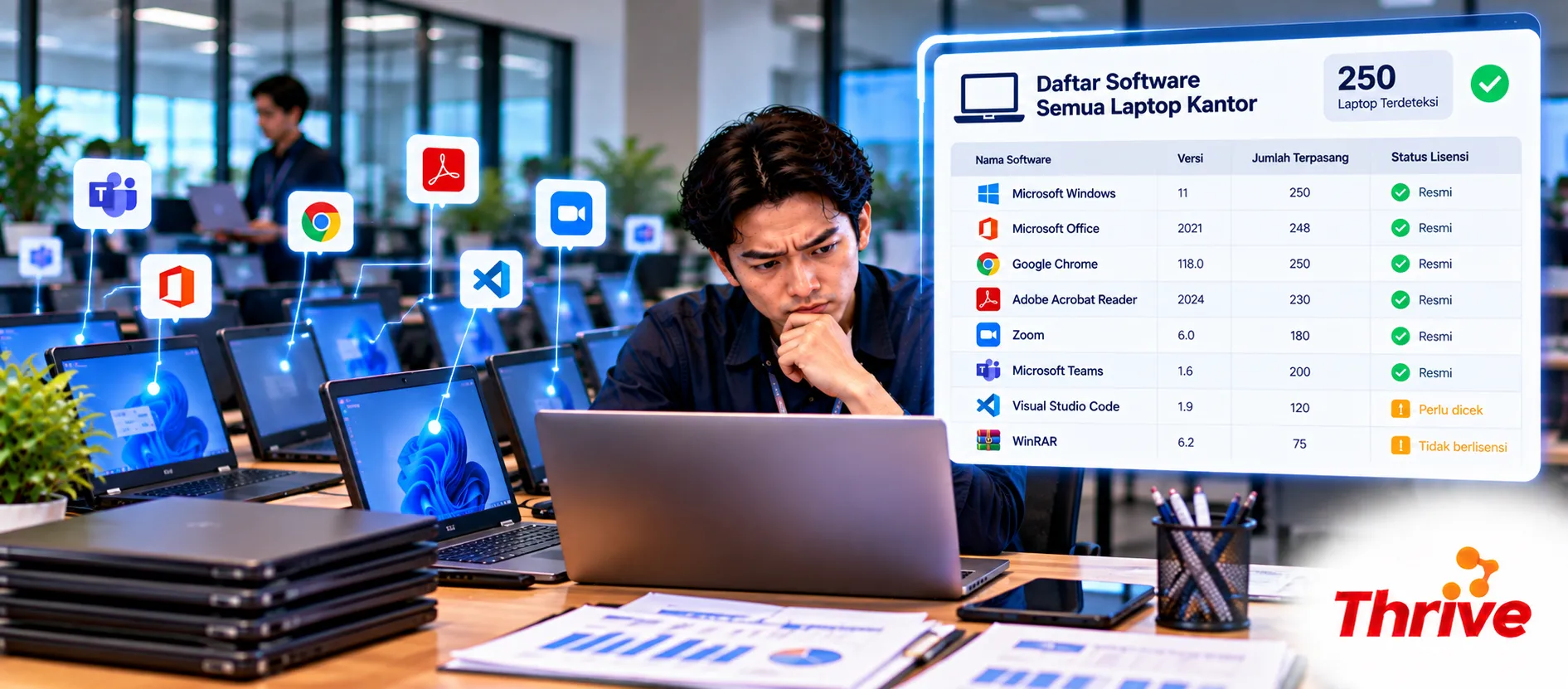
In many companies, software-related processes are spread across several departments. IT handles installation, Procurement purchases licenses, while Finance receives invoices and processes payments. Problems arise when each department keeps its own records without a single shared source of information.
As a result, companies may continue paying for software that is no longer used, purchase duplicate licenses, or miss renewal deadlines. That is why the procurement of affordable genuine software should ideally be managed through one centralized workflow and database.
What Does Centralized Software Management Mean?
It does not mean one department handles everything. IT, Procurement, and Finance still maintain their respective responsibilities.
Use one database to record software, users, number of seats, costs, and renewal dates.
All requests for affordable genuine software should go through the same approval workflow.
Assign one PIC as the license owner to prevent ownership gaps.
Review usage at least every 3–6 months and review renewals 30–60 days before the due date.
What Happens If Every Department Keeps Its Own Data?
Imagine IT records 80 active users. Procurement has a purchase order for 100 licenses. Meanwhile, Finance receives a renewal invoice for 100 seats.
Without reconciliation, Finance will most likely pay according to the invoice.
However, there is a difference of 20 licenses that should be reviewed. Those users may have resigned, transferred to another department, or simply no longer need the application.
When a company purchases affordable genuine software, the purchasing data should immediately be entered into a single source of information that can be accessed by all relevant functions.
IT Knows Usage, Procurement Knows Purchasing
IT usually understands the actual usage situation: which applications are installed, who uses them, which devices are active, and whether the software is still needed.
Procurement, on the other hand, has information about vendors, quotations, purchase quantities, contracts, and commercial terms.
If information about affordable genuine software is stored only by Procurement, actual usage data may be overlooked.
Conversely, if affordable genuine software data is managed only by IT, information about pricing, invoices, and contracts may be incomplete.
Therefore, what needs to be centralized is not the work itself, but the data.
Finance Needs to See More Than Just the Invoice
Finance should not simply receive an invoice and process the payment.
Before renewal, Finance needs to know whether the number of licenses still matches actual business needs.
For example, if affordable genuine software costs Rp200,000 per user per month and there are 15 unused seats, the company could be spending Rp3 million per month or Rp36 million per year on licenses that provide no value.
With a centralized database, Finance can request confirmation of affordable genuine software usage before a renewal payment is processed.
A Centralized Process Can Speed Up Approvals
Centralized management does not necessarily mean adding more bureaucracy.
The workflow can actually be kept simple:
User Request → IT Review → Procurement → Approval → Purchase → IT Assignment → Finance Record
When users need affordable genuine software, they do not need to search for vendors or make purchases themselves. They simply submit their requirements through the established process.
After the affordable genuine software is purchased, IT assigns the license and updates the database. Finance then has access to the same cost and renewal information.
Avoid Storing License Data Across Emails and Chats
Another common issue is documentation.
The product key may be stored in an IT email, the quotation may be with Procurement, the invoice may be with Finance, while user information sits in a separate spreadsheet.
When the PIC changes, finding the required information becomes difficult.
Data for affordable genuine software should ideally include the product name, vendor, number of seats, users, devices, costs, invoices, purchase date, renewal date, and PIC in a single system.
Build a Centralized System in 7 Steps
Assign one License Owner.
Create one centralized software inventory.
Use one workflow for requests and approvals.
Record every purchase of affordable genuine software, including the number of seats and users.
Connect onboarding and offboarding processes with license assignment.
Review usage every 3–6 months.
Review affordable genuine software at least 30–60 days before renewal.
FAQ
1. Does centralized management mean all purchases must be handled by IT?
No. IT remains focused on technical aspects, Procurement handles purchasing, and Finance manages payments. What is centralized is the workflow and the data.
2. Who should become the License Owner?
Usually IT, IT Asset Management, or a dedicated PIC with access to usage data who can coordinate with Procurement and Finance.
3. Is a spreadsheet enough?
For small companies, yes. As the number of users, applications, and subscriptions grows, companies may consider using a more structured asset management system.
4. What are the risks if employees purchase software themselves?
The company may face duplicate subscriptions, Shadow IT, incomplete documentation, or the use of an unsuitable license type. Requests for affordable genuine software should go through the official procurement process.
5. When should license data be updated?
Whenever there is a purchase, renewal, assignment, reassignment, additional device, or user change. Do not wait for the annual audit.
6. How can companies avoid unused licenses?
Connect license management with onboarding and offboarding. When an employee leaves the company, check whether the license can be terminated or reassigned to another user.
7. What is the minimum information required in a software inventory?
Software name, vendor, license type, number of seats, users, devices, cost, purchase date, renewal date, invoice, and PIC. This information makes future affordable genuine software requirements easier to forecast.
Centralized software management is not about putting every responsibility under a single department. The goal is to create a single source of truth so that IT, Procurement, and Finance work with the same information.
With this system, the procurement of affordable genuine software can run more efficiently, renewals can be better controlled, and unused licenses can be identified more easily.
Ultimately, centralizing the management of affordable genuine software helps companies know three important things at any given time: what software they own, who is using it, and how much it actually costs.
Related Articles
Also read other interesting information from us

General
Omnisend Complete Guide: How to Use Email & SMS Marketing Effectively
In the increasingly competitive world of digital marketing, personalization and automation are the two main keys to reac...

General
How to Care for Rechargeable Batteries to Keep Them Optimal and Long-Lasting
Rechargeable batteries are a popular choice because they are practical, economical, and environmentally friendly. Howeve...

General
How can the 5G network help remote areas in Jambi?
In the digital era, internet access is becoming an increasingly important need, including for people in remote areas suc...
Get Free Consultation
Discuss your company's IT needs with our customer support right now at
+62 822 9998 8870


