Article Sep 25, 2026, 01:33 AM
If your company already uses original software, why is there still a risk of pirated software?
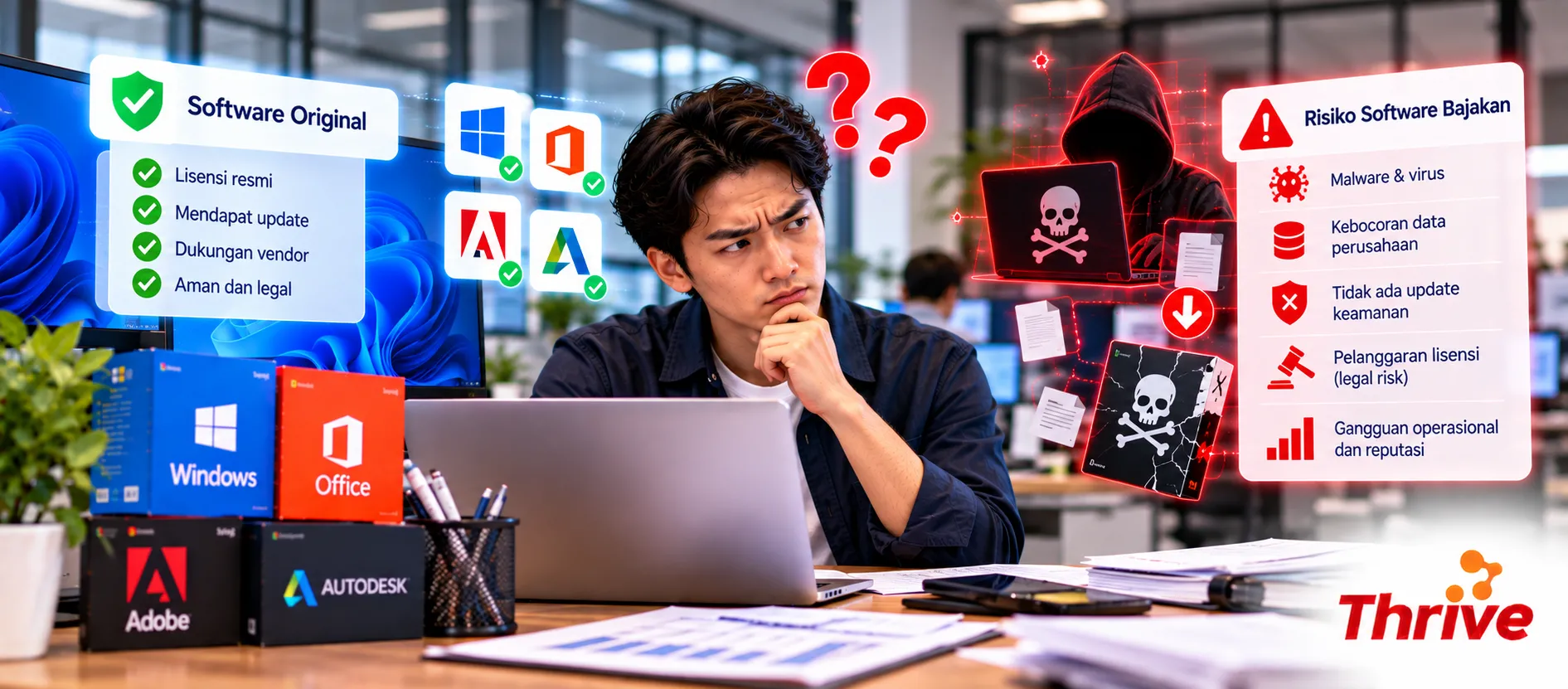
The company has purchased genuine software, but does that automatically mean all devices are free from pirated software? Not necessarily. Risks can still arise from employee self-installation, old laptops, unregistered additional applications, and even product keys from unknown sources.
Therefore, buying cheap original software, it needs to be accompanied by installation control and software inventory. The focus is not just on "the company has purchased a license," butDoes each software used have appropriate usage rights?.
Where Does Unofficial Software Come From?
Employees install the application themselves.This often happens when users need additional tools to complete a job.
Old devices were never audited.Laptops that have been used for 2–3 years can store unregistered applications.
Product keys do not necessarily have the appropriate usage rights.Buying cheap original software, still need to pay attention to the type and source of the license.
Shadow IT is hard to see.The software can be used without IT or procurement knowledge.
Audit every 3–6 monthshelping companies find non-compliant installations early.
I've Bought a License, Why Isn't It Still Enough?
In practice, license compliance is not calculated based on a single invoice. What needs to be considered is:what software is installed, who is using it, how many licenses they have, and what are their usage rights?.
For example, a company might have 100 laptops and have purchased 100 operating system licenses. This doesn't automatically guarantee that the other applications on all those laptops also have the appropriate licenses.
When the company buys cheap original software, recording should be done per product, number of seats, user or device, active period, and proof of purchase.
Shadow IT: Software That IT Teams Don't Know About
Imagine an employee needs a specific PDF application. Because the procurement process is too time-consuming, he searches for an installer online and installs it without IT approval.
This is one formshadow IT.
Even though the company may actually already have cheap original software, with the same functionality. Without proper inventory software, IT won't know these additional applications are on company devices.
Besides licensing issues, installers from untrusted sources can also pose security risks. Therefore, using cheap original software, ideally accompanied by a policy regarding who may perform the installation.
Original Does Not Necessarily Have the Appropriate License
There is another situation that is often confusing: the software is successfully activated and looks genuine, but is the license really suitable for corporate use?
Not necessarily.
Cheap original software, need to be checked based onlicense type, number of devices or users, commercial use, active period, and vendor conditions.
For example, a single license may only be valid for one device. If the same product key is installed on multiple computers without additional privileges, this could create compliance issues.
That is why the purchase cheap original software, preferably through a documented procurement process, not just looking for a successfully activated key.
Risks Can Come from Old Devices
New laptops are usually easier to control. Older devices often have blind spots.
When a company has 50–100 devices, software installed years ago can become forgotten. IT teams may no longer know the origin of the installer, the license, or who activated it.
When doing a review cheap original software, old devices should also be checked. Matchinstalled softwarewith the license data owned by the company.
How to Close Unofficial Software Loopholes
Create a software inventory for all company laptops and computers.
Restrict application installation rights to users if necessary.
Save the invoice, product information, number of seats, and active period.
Device audit and cheap original software, every3–6 months.
Incorporate software checks into the onboarding and offboarding processes.
Remove applications that have no clear business need or licensing source.
Use one procurement channel for purchasing cheap original software, so that documentation is easier to track.
FAQ
1. If Windows is original, is all the software on the computer automatically legal?
No. Each application has its own license and terms of use. A licensed operating system doesn't automatically license other applications.
2. How do you know if there is unauthorized software on your company computer?
Perform a software inventory. Compare the list of installed applications with the recorded purchase data, number of licenses, users, and devices.
3. Does the successfully activated software definitely have the correct license?
Not always. Technical activation and license usage rights are two things that need to be distinguished. Therefore, the source of purchase cheap original software, and the license documentation remains important.
4. How often does a company need to perform a software audit?
For companies with fairly active employee and device changes, review every3–6 monthsis a practical interval.
5. What is shadow IT?
Shadow IT is the use of technology applications, services, or devices without the control or official approval of a company's IT function.
6. Should employees be prohibited from installing their own software?
It depends on company policy. For environments requiring high levels of control, restricting administrator privileges can help prevent unauthorized installations.
7. What should you do if you find software whose license is unclear?
Identify the application's needs, check the source and license status, then uninstall or regularize it if necessary. The company can replace it with cheap original software, which has appropriate documentation and usage rights.
Having genuine software is the first step, not the end, in license management. Companies still need installation control, device inventory, documentation, and regular audits.
By managing cheap original software, centrally, companies can more easily see what is being used, who is using it, and whether the number of licenses is as needed.
Ultimately, the use of cheap original software, coupled with clear software inventory and installation policies, helps companies maintain compliance while reducing security risks from uncontrolled applications.
Related Articles
Also read other interesting information from us

General
Top 5 WordPress Plugins That Will Turn Your Website Into a Money Machine!
A website that makes money is no longer just a dream. With the WordPress platform, you can turn your website into a stab...

General
Is Starlink Worth It? Read the full review here
Satellite-based internet technology continues to develop, and Starlink become one of the main players in provi...

General
5 Simple SQL Queries That Will Change the Way You Manage Your Database
SQL (Structured Query Language) is a very important language for anyone working with databases. Using SQL, you can easil...
Get Free Consultation
Discuss your company's IT needs with our customer support right now at
+62 822 9998 8870


