Article Sep 22, 2026, 03:44 AM
Why Can Crack and Activator Files Become Security Vulnerabilities in Office Computers?
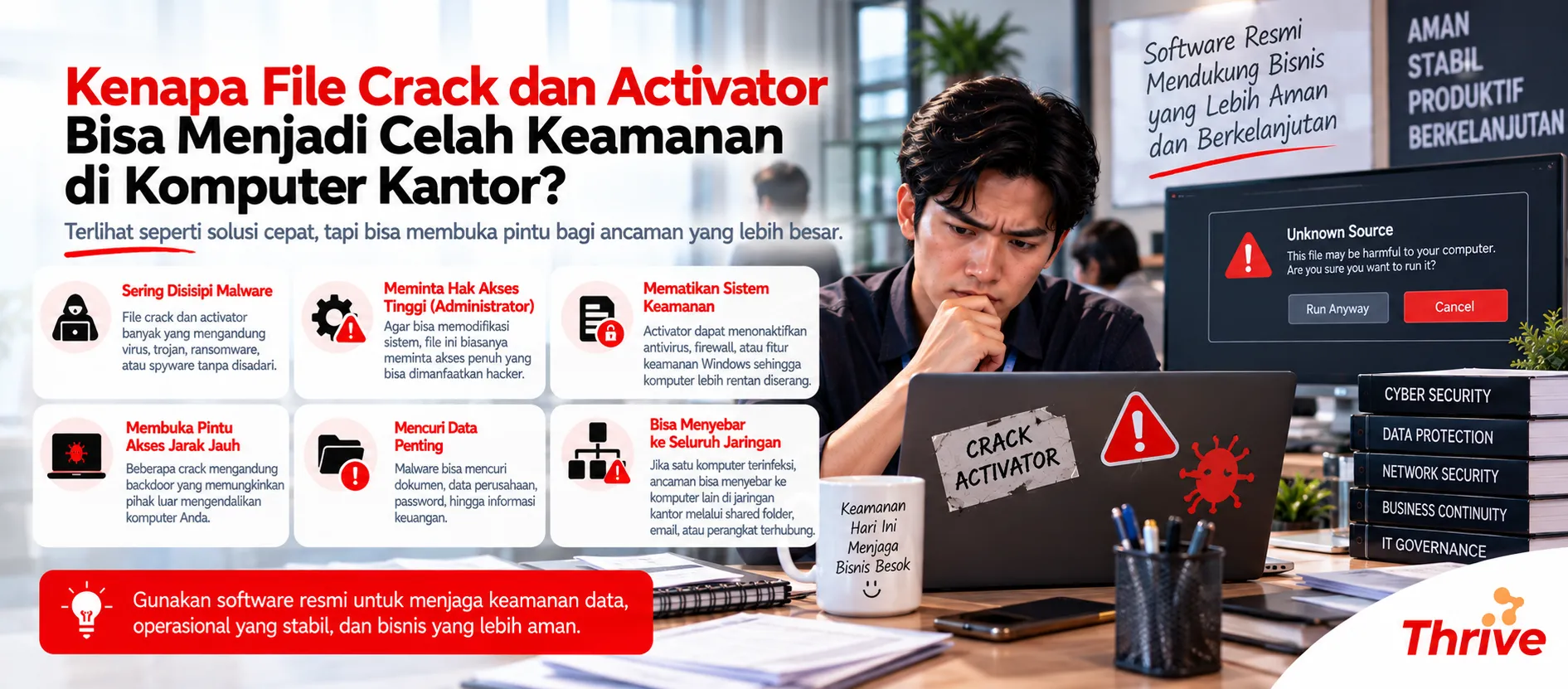
Crack and activator files can be a security hole because they work withmodifying files, configurations, or software activation mechanismsThe risk is even greater if the file comes from an unverified source and requires antivirus software to be disabled during installation.
On office computers, the impact can be more serious because the devices are often connected to email, cloud storage, shared folders, and even internal company systems. Rather than taking these risks, use... cheap original software,from a trusted source makes the installation and licensing process easier to control.
Why Should You Be Wary of Cracks and Activators?
The file comes from an unofficial source soits integrity is difficult to verify.
Certain activators require antivirus or security features to be disabled.
System files or application configurations may be modified.
Malware can disguise itself as part of an installer or activation tool.
Usage cheap original software,helps avoid the need to use cracks to bypass activation.
The problem isn't that every crack contains malware. The main problem is thatenterprises lose certainty about what is actually running on the endpoint.
What Actually Happens When a Crack Is Run?
Licensed software typically has a mechanism to verify whether the user has valid usage rights. Cracks or activators are used to bypass this process.
This may involve changes to application files, system configuration, or license validation processes.
From an IT security perspective, this type of activity is a concern because users are granting permissions to programs whose origin and integrity are difficult to verify.
Especially if the computer has administrator access.
Therefore, companies should provide a purchasing process. cheap original software,so that employee application needs do not end up with installations from random sources.
Why is the Request to Disable Antivirus a Red Flag?
Ever come across an installation guide that asks for“Disable Antivirus Before Installation”?
For enterprise devices, instructions like this should be treated as a red flag.
Antivirus, EDR, or endpoint protection are layers of computer defense. When these protections are disabled, executable files have a greater opportunity to perform activities without normal oversight.
If the company has50–100 endpoint, one installation habit like this can create many blind spots.
Providing catalog cheap original software,for frequently used applications, this can be one way to reduce shadow IT.
The Risks Can Be Greater Than a Single Application
Office computers rarely stand alone.
One laptop can have access toMicrosoft 365, Google Workspace, CRM, ERP, VPN, NAS, shared folders, and internal applications.
If a device is infected with malware, the subsequent risks depend on the type of malware and the user's access privileges. Credentials could be targeted, files could be affected, or the device could be used to attempt to access other resources.
That is why migration towards cheap original software,should be prioritized on finance, HR, management, and IT administrator devices that have sensitive access.
Check Your Office Computer with These 7 Steps
Inventory of all installed software.
Look for cracks, activators, keygens, or unauthorized applications.
Make sure your antivirus or EDR is always active.
Check the security update status.
Restrict local administrator access.
Audit software every6–12 months.
Migrate risky applications to cheap original software, gradually.
FAQ
1. Do all cracks contain viruses?
This is not a definitive conclusion. However, cracked files originate from sources whose integrity is often difficult to verify, thus carrying a higher risk.
2. Why do antiviruses often detect activators?
Because activators can perform activities such as modifying files or software mechanisms, for business purposes, it's safer to use cheap original software,with official activation.
3. If the activator has been used for a long time and there are no problems, is it safe?
Not necessarily. The absence of symptoms does not prove that the file is safe or that its license is correct.
4. What should you do if you find a crack on your work laptop?
Don't assume the problem is solved after deleting the file. Run a security scan, check the associated software, check for suspicious activity, and then migrate user needs to the new system. cheap original software,.
5. Which device should be checked first?
Prioritize laptops with access tofinance, HR, server, VPN, database, email administrator, and customer data.
6. How to prevent users from using the activator again?
Restrict installation rights, create software whitelists, simplify the request process, and provide access. cheap original software,according to division needs.
In essence, the risks of cracks and activators are not just about licensing status. In a business environment, unverified files can increaseattack surfaceon corporate endpoints. With installation controls, endpoint protection, regular audits, and the use of cheap original software,From trusted paths, companies can mitigate risks before a single suspicious file escalates into a larger security incident.
Related Articles
Also read other interesting information from us

General
ricks for Negotiating ERP Software License Prices with Vendors
Negotiating ERP software license prices is a crucial step for companies looking to optimize their IT budget without comp...

General
Professional Video Editing Software Recommendations for Content Creators
In today's digital era, video content is the most powerful medium to reach an audience. From YouTube, TikTok, to Instagr...

General
How Much Does a Professional Website Cost? Here's a breakdown of the costs you need to consider
Having a professional website is an important requirement for every business that wants to develop in this digital era....
Get Free Consultation
Discuss your company's IT needs with our customer support right now at
+62 822 9998 8870


