Article Sep 25, 2026, 01:35 AM
Employees Free to Install Apps on Work Laptops? Beware of Shadow IT Risks
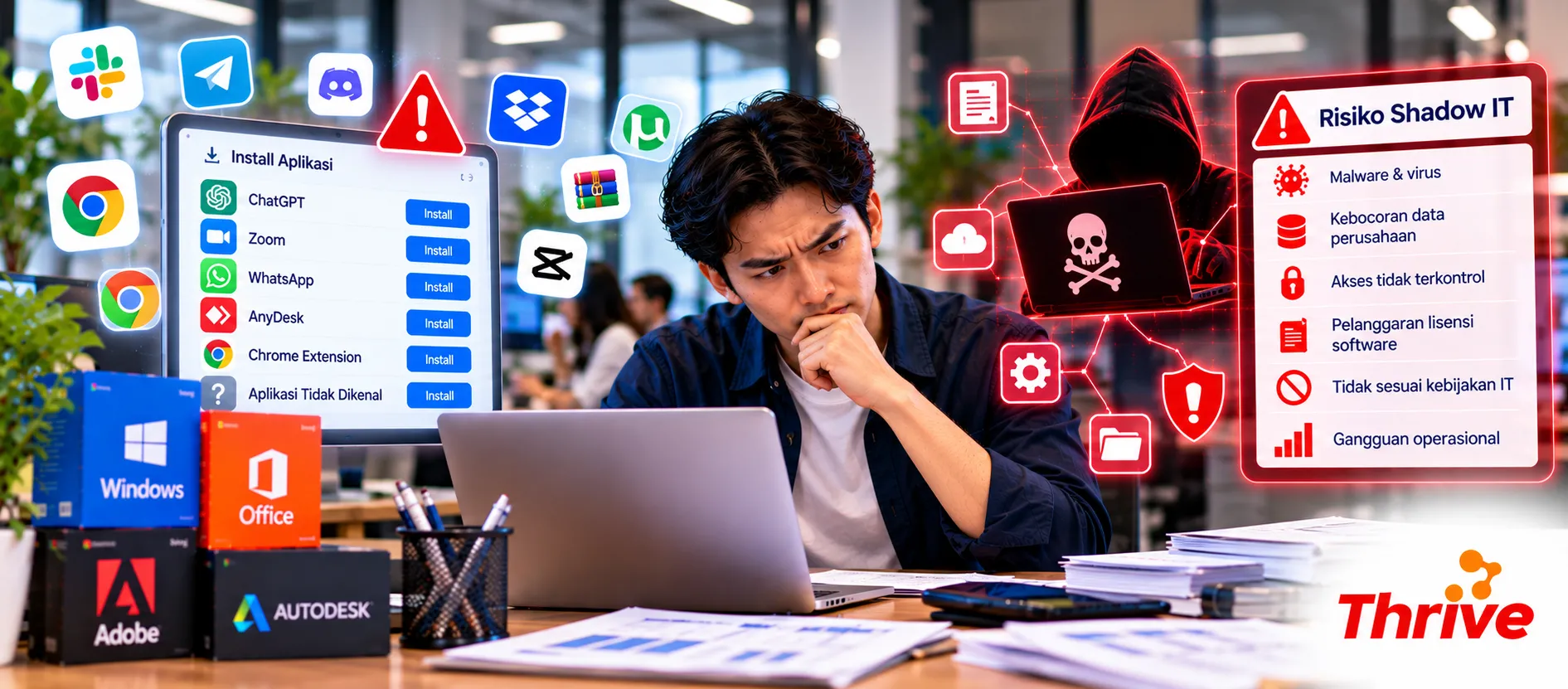
Employees installing their own applications on their work laptops may seem convenient. They need a PDF converter, just download it. They need a meeting app, just install it. The problem is, the IT team ends up not knowing which applications are running and which services are processing company data.
This is one formShadow IT. Therefore, the use of cheap original software, it should be accompanied by clear installation rules so that user flexibility does not turn into a security and licensing risk.
Why Free Installation Can Be a Problem?
Shadow IT makes applications difficult to monitor.IT does not have full visibility into the software being used.
Company data can enter third-party applications.Especially cloud applications, AI, file converters, and collaboration tools.
Personal licenses may not be used for business. Choose cheap original software, still need to consider usage rights.
Administrator access increases the risk of uncontrolled installation.
For companies with dozens of devices, perform a software inventory at least once every two months.3–6 months.
What Does Shadow IT Actually Look Like?
Shadow IT is the use of applications, cloud services, or technology without official company approval and oversight.
A simple example: an employee receives a large file. Lacking the appropriate application, he installs a free tool from the internet using his work laptop.
Operationally, the problem was resolved within 5 minutes. From an IT perspective, new questions arose: who created the app? Is it secure? Where are the files uploaded? What are the licensing terms?
If the company provides cheap original software, through official procurement channels, these needs are easier to control and document.
Risk One: Unverified Apps
Not all installers on the internet come from official sources. Users may download applications from third-party websites because they appear at the top of search results.
Here's the reason cheap original software, should be obtained from a reputable source and the installer verified before use on corporate devices.
The risk isn't just malware. Apps can also requestpermissionexcessive, running in the background, or having an unclear update mechanism.
Second Risk: Data Leaks Unknowingly
Shadow IT becomes more complex when cloud-based applications are used.
For example, an employee might upload a client proposal to an online tool to convert PDF to Word. The document might contain the client's name, pricing, or internal information.
Companies that have provided cheap original software, can determine which applications are approved to handle business documents.
The same goes for AI tools, cloud storage, project management, and file-sharing. Uses cheap original software, still need to be combined withaccess policyand data classification.
Risk Three: Inappropriate License
Free for personal is not necessarily free for companies.
An application may be free to download, but its license agreement restricts commercial use. Users often don't check this when installing.
Therefore, before replacing the application with cheap original software, the IT or procurement team needs to check the license type and number of users required.
Procurement cheap original software, centrally also makes invoices, subscriptions, product keys, and renewals easier to track.
Should Employee Installation Rights Be Blocked?
Not all companies need the same policies. However, providinglocal administrator privilegeto all users without control can increase the attack surface.
For companies with 50–100 laptops, a more scalable approach is to provide a list of approved applications. If a new application is needed, users submit a request to IT.
Every cheap original software, which is approved then enters the company's inventory software.
7 Steps to Reduce Shadow IT
Create a list of applicationsapproved and prohibited.
Limit administrator privileges according to job requirements.
Provide a fast application request procedure.
Software inventory on all endpoints every3–6 months.
Note down the user, device, and license cheap original software, centrally.
Review cloud applications that can access or store company data.
Confirm purchase cheap original software, through documented procurement channels.
FAQ
1. What is Shadow IT?
Shadow IT is the use of technology, applications, or services without the official approval or oversight of a company's IT function.
2. Are all self-installed applications dangerous?
No. The main problem is that the application has not passed the company's security, business needs, and licensing verification.
3. Should companies ban all installations?
Not always. Companies can implementapplication allowlistand approval mechanisms so that user needs can still be met without losing control.
4. What is the relationship between Shadow IT and pirated software?
Users who are free to search for their own applications may potentially use installers, cracks, or product keys from unofficial sources. cheap original software, through official channels can help reduce the need to seek uncontrolled alternatives.
5. How to detect Shadow IT?
Starting from software inventory on endpoints, reviewing browser extensions, cloud applications used, and monitoring devices through endpoint management if available.
6. Who should approve new software?
Ideally, it involves IT for technical and security aspects and procurement or finance for purchasing and licensing aspects.
7. What are the first steps for a small company?
Start simple. Create a list of permitted applications, record purchased software, and designate a point person. When needed cheap original software, make sure that purchases and user assignments are recorded.
Shadow IT doesn't always arise from employees intentionally breaking rules. Often, it's because users need a quick solution, but the company hasn't provided a practical process.
Therefore, the best control isn't simply prohibiting installation. It combines a fast request process, software inventory, access control, and availability. cheap original software, so that work needs are still met without losing visibility.
With management cheap original software, which is centralized, companies can maintain productivity while reducing security risks, data leaks, and licensing issues due to Shadow IT.
Related Articles
Also read other interesting information from us

General
Guide to Choosing the Best Antivirus: Bitdefender, Norton, or McAfee?
In an ever-evolving digital world, cyber threats are increasingly complex—from malware, ransomware, to personal data lea...

General
How to Optimize CTAs Without Interfering with User Experience
A Call to Action (CTA) is a crucial element on a website because it directly encourages visitors to take the desired act...

General
Do Former Employees Still Have Access to Company Software? This Is an Often Overlooked Risk
An employee has resigned, but their Microsoft 365 account, CRM, cloud storage, VPN, or internal software are still activ...
Get Free Consultation
Discuss your company's IT needs with our customer support right now at
+62 822 9998 8870


